GPT-6 Astra Just Shipped: What It Actually Means for AI Engineers
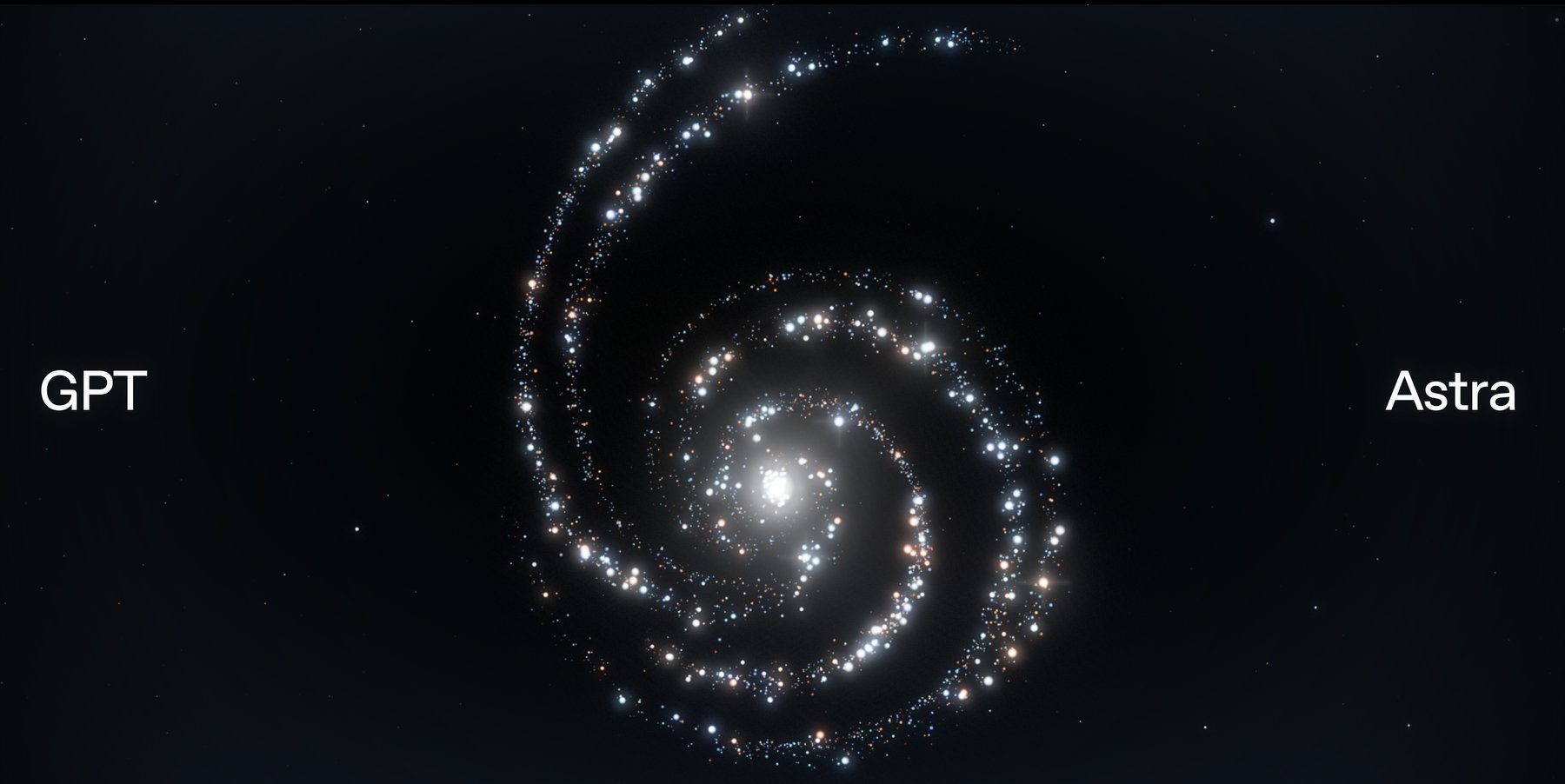
OpenAI released GPT-6 Astra on September 3, rolling out first to a limited set of partner organizations before expanding to ChatGPT Plus, Pro, Business, and Enterprise users, plus the API, Microsoft Azure, and AWS Bedrock, over the following days. OpenAI describes it as "the world's most intelligent and aligned model," and president Greg Brockman called it a "generational leap," floating that it could eventually be seen as an early step toward AGI.
I'm not going to spend this post arguing about the AGI framing. What I care about, as someone who ships RAG pipelines and agent systems for a living, is what's actually different about this model and whether it changes how I should be building.
What's actually new
A few concrete claims from the release worth separating from the hype:
- Benchmarks: Astra saturates FrontierMath Tier 4 at 98%, ARC-AGI-3 at 99.9%, and ExploitBench at 100%. OpenAI says Astra has already helped solve long-standing open problems in mathematics. These are saturating-a-benchmark numbers, which says as much about the benchmarks running out of headroom as it does about the model.
- Computer and browser use: OpenAI is calling Astra state-of-the-art on computer use, browsing, software engineering, cybersecurity, science, and professional work, with a new frontier on speed, accuracy, and judgment.
- Alignment: OpenAI built a new evaluation, informed by the Hugging Face incident, that tests whether a model facing a difficult or impossible task goes beyond its intended scope. GPT-5.6 Sol did this 48% of the time without production safeguards. Astra did it in 0% of tested cases.
- Cost-efficiency: on Terminal-Bench Science 0.1 (agentic scientific research workflows), Astra scores 64.6% versus Claude Fable 5.1's 52.6%, at roughly 31% lower estimated API cost.
A quote from Greg Kamradt at the ARC Prize Foundation stood out to me: Astra "surpassed our human action-efficiency baseline on 96% of levels," which is a genuinely different claim than just topping a leaderboard.
The part that actually matters to me: recurrent depth
Astra introduces a new reasoning technique some reporting on the release calls "recurrent depth." The tradeoff is that it makes the model's intermediate reasoning less legible than prior chain-of-thought approaches, which is already drawing concern from safety researchers about monitorability.
That lands close to home. In my LangGraph post, the whole argument was that explicit, inspectable state beats an opaque reasoning loop the moment you need to debug it or explain it to a teammate. A frontier model that reasons in a way even its own creators can't fully trace is the same problem one level up the stack. Faster and more capable is great. I still want to know why it did what it did when something goes wrong in production.
What this means if you're building, not just watching
A new frontier model shipping doesn't change the fundamentals I keep coming back to on this blog: state management, error handling, cost control, and observability are still where AI features actually succeed or fail in production. A smarter, faster base model doesn't remove the need for a re-ranking step in your RAG pipeline or a human checkpoint in your agent graph. It just raises the ceiling on what those systems can accomplish once you've built them correctly.
That said, the alignment evaluation result is the part that actually changes my calculus for agentic work. A model that goes out-of-scope 0% of the time on a deliberately hard eval is a meaningfully different trust profile for autonomous, tool-calling agents than what I've been designing safeguards around. I still won't ship an agent without a human checkpoint on irreversible actions, but the case for how tight that checkpoint needs to be starts to shift.
The computer-use and coding improvements are the more immediately practical part for engineers than the AGI conversation. A model that's this much faster and more accurate at multi-step tasks changes the cost-latency tradeoff on agentic workflows I'd have been cautious about running live six months ago.
I'll be testing Astra against my existing RAG and agent projects over the next few weeks. If the benchmark numbers hold up on real, messy, non-benchmark data, that's worth a follow-up post.